
When Your Story Includes Regret
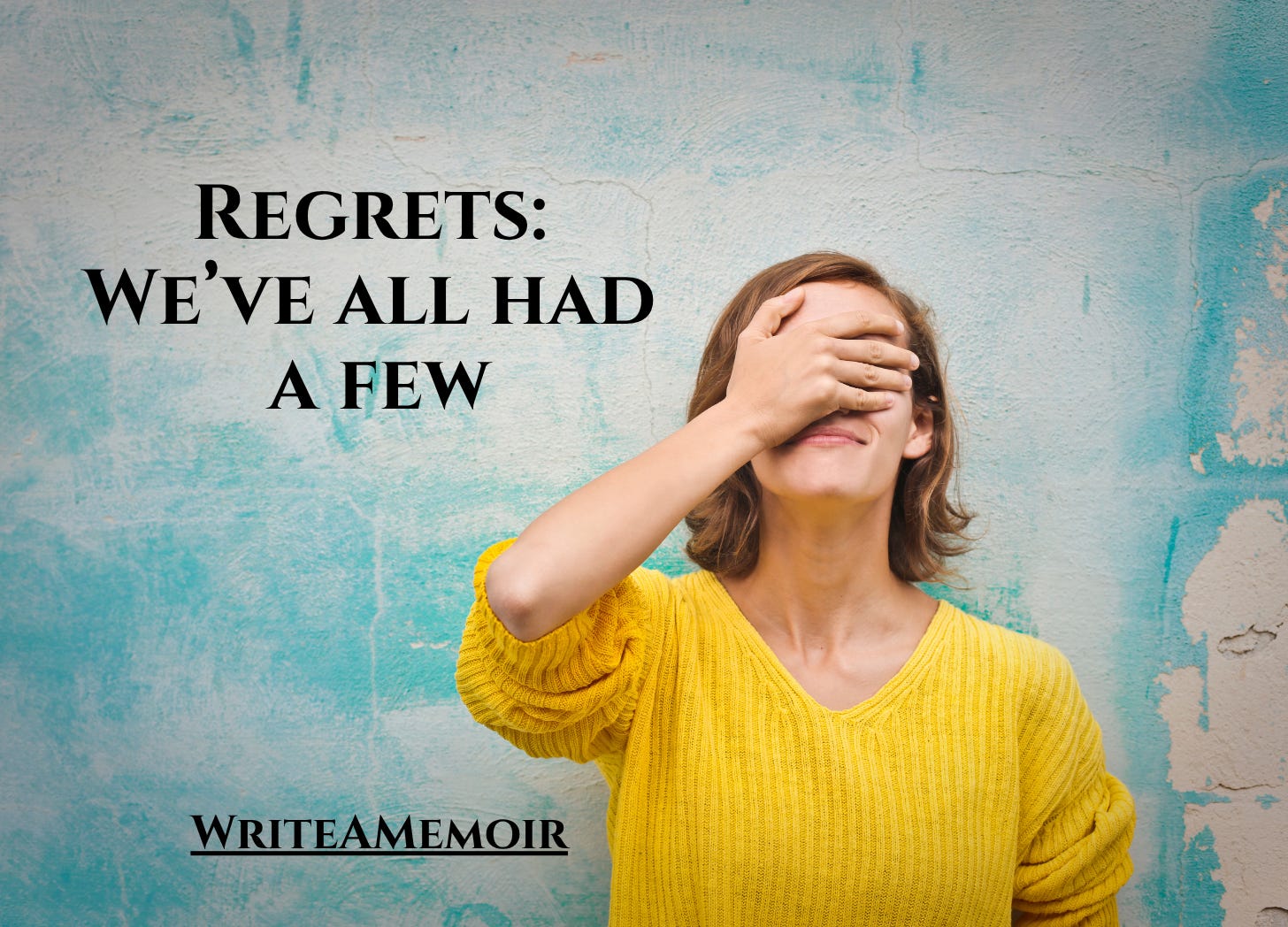
Mark Twain said, “In twenty years you will regret what you didn’t do more than what you did.”
We make choices and decisions all the time. Every time you say yes to one thing, you are saying no to something else—or a LOT of something elses. It’s kind of the deal. Not making a decision is a decision in itself. And life is full of decisions and choices, big and small.
I worked for American Hawaii Cruise Lines way back when and they had a slogan: Don’t Miss a Thing!
Every night we printed up the program of activities for the next day. People would come to the Purser’s Office absolutely TORN because they wanted to do the napkin folding AND do the shore excursion AND listen to the talk on the history of hula. The problem, of course, is that they couldn’t become three people and do all three. Or time travel so they could hit all three events.
Frankly, their fear of having regret was greater than their actual regret. They didn’t want to choose the wrong thing. The amount of energy spent agonizing over these choices seemed to have an inverse relationship to the triviality of the activities. I blame the slogan. Talk about pressure!
Regret comes from blaming yourself for a negative outcome because of a decision you made. Hopefully, your regrets are about bigger things than missing the napkin folding class. (Good news: There are tons of videos on YouTube for that now!) Our typical regrets include education, relationships (What was I thinking??), career choices, not establishing or holding boundaries. Many times, we regret missed opportunities: “If I only knew then what I know now.”
I don’t think there is anyone on the planet who doesn’t have regrets. EVERYONE has absolute cringe moments that make them blush to this day. (At least I hope I’m not the only one.)
But some of us may have bigger regrets than others or feel more responsible for an outcome. And maybe we are the person responsible for that outcome. Maybe it is our fault. Sometimes the outcome was really bad and it could not be fixed. Nothing would put it right.
Your memoir is a chance to go over the information you had at the time that led you to that decision. It’s a chance to show how you were then, maybe revisit the fears or insecurities you had back then that made you decide to take one path and not another. Maybe you’re writing about a period of your life that was one bad decision after another.
But at some point, you started making better decisions. You learned. You grew. You changed.
Regret isn’t always a bad thing. It’s a signal that something was important to you—enough so that you still think about it all these years later. You can go back and look at the choice you made then and ask yourself if you would make the same choice if you had the knowledge and experience that you now possess. Just remember you most likely gained that experience because of the choice you made.
Regret is the result of growth. While it doesn’t feel good, it’s actually a good sign.
If you’ve been thinking of writing a memoir and don’t know where to start, I can help. My self-guided course, Spill the Ink, takes you from idea to published book. This course has 8 modules that include video, a course manual, as well as worksheets prompts, and checklists. Find out more here: SPILL THE INK